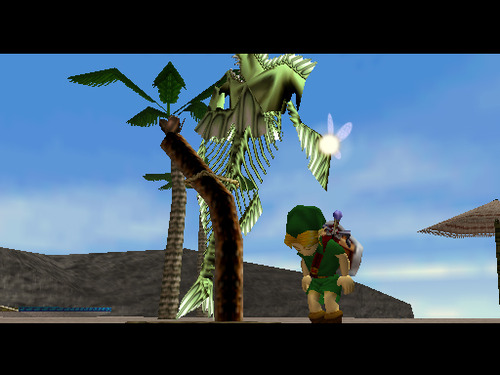
What can Deku Link teach us about the nature of gaming? Part I of III examining the Song of Healing.
In the first of three posts about the Song of Healing, I argue that Deku Link offers us unique insight into video games as an aesthetic object.
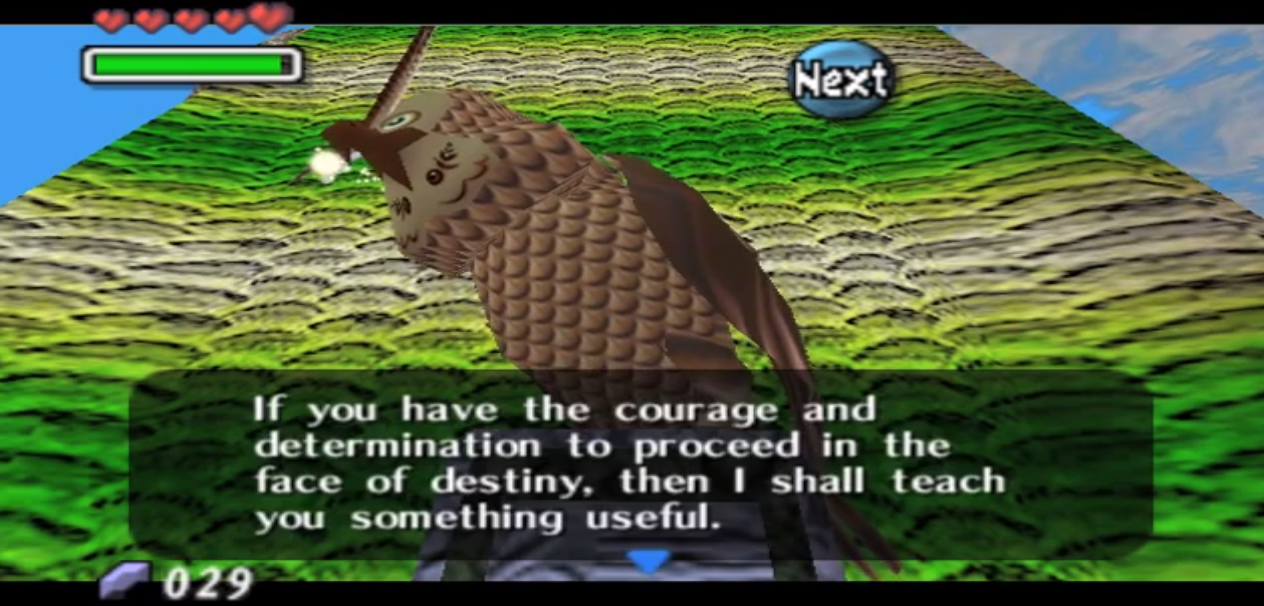
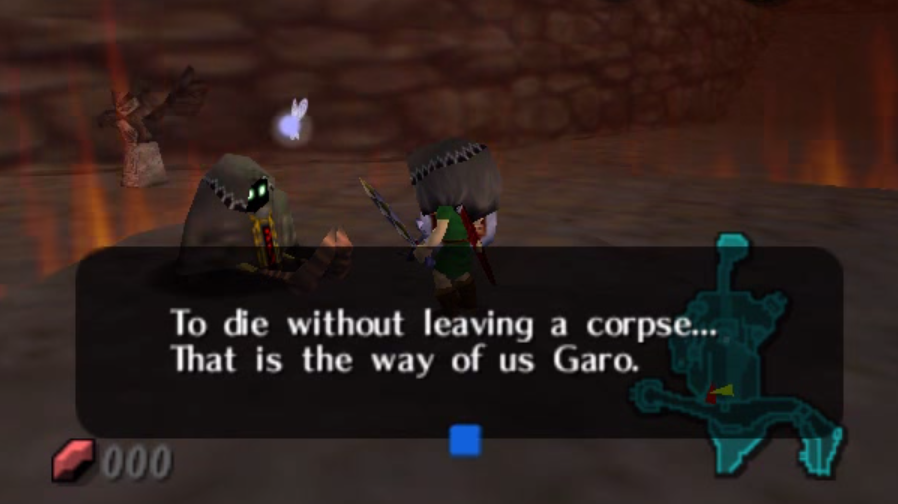
With the background of Kaepora Gaebora, I take a first pass at sketching a Majoran thesis of free will / determinism.
“Majora’s Mask” contains a thesis on how groups are marginalized by society. Here, I argue that the ease with which one can miss this game element is precisely what makes its content so impactful.
Many people view video games much more as toys than as serious works of art. In light of this, without dwelling on it too long, I would like to dedicate one post to an attempt to convince the cynic that video games deserve to be taken seriously as aesthetic works.
In this post, I explore what about “Majora’s Mask” and the world of Termina makes death more imminent and haunting than any other “Zelda” title could.
In the game entitled “Legend of Zelda: Majora’s Mask,” Zelda does not exist. It is this anomaly and its effects that I chart in this post.