What do the past, present, and future of video-game storytelling look like? With a Terrible Fate will be discussing all three at PAX East 2018 this coming April.
Join us on Thursday, April 5th and Friday, April 6th for two panels, where a total of eight With a Terrible Fate analysts will be on the scene to dive deep into the art of gaming.
Here’s everything you can expect.
1. “Which Games Belong in the Video Game Canon?”
Thursday, April 5th, 5:30 pm, Bumblebee Theatre | Featuring: Aaron Suduiko, Dan Hughes, Richard Nguyen, Skylar Cohen, and Matt McGill
What are the “Great Books” of video games? Which games have made central contributions to the special storytelling craft of video games over the course of the medium’s development? These are the questions we’ll be wrestling with in this panel, as we explore what a video game canon is, why we ought to think in terms of one, and how we ought to go about developing one.

From With a Terrible Fate’s presentation at PAX Aus 2016. We spoke about horror-storytelling in video games.
The panel is based on With a Terrible Fate’s ongoing series, Now Loading… The Video Game Canon! If you haven’t checked it out yet, now’s your chance.
Our hour-long presentation will consist of three parts:
- For about 15 minutes, Aaron will discuss what a video game canon is and what the benefits (and costs!) are of seeing video-game storytelling through the lens of a canon.
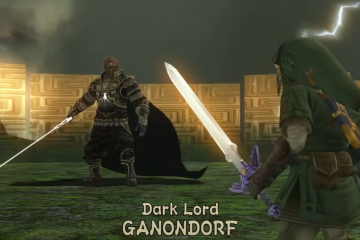
- For about 15 minutes, Dan will discuss how he goes about evaluating whether or not games deserve admission into the video game canon. He’ll walk through his analysis of Ocarina of Time as an example, and also to demonstrate that we shouldn’t complacently accept masterpiece stories as “obviously good stories”: rather, we should ask why it is that their stories are so good.
- The second half of the panel will be a free-wheeling discussion between our panelists and the audience. We’ll have with us a list of games we’d like to consider for induction into the video game canon: we’ll have the entire audience vote on which game they’d like to discuss, and the majority-voted game will be the subject of our debate!
We had a great time last month sharing this panel with PAX South and debating whether Portal belongs in the video game canon, and we’re excited to tackle a whole new game with the good people of PAX East.
2. “Sequels, Series, DLC: How Games are Changing Storytelling”
Friday, April 6th, 2:30 pm, Bumblebee Theatre | Featuring: Aaron Suduiko, Laila Carter, Jaron R. M. Johnson, and CJ Thomas
Between DLC, long-running franchises, and episodic content, video games are continuing to redefine what it means to tell a single story in serial form. Where have these storytelling innovations succeeded? Where have they failed? How might they continue to evolve in the future? These are the core questions that will keep us obsessed in this presentation.

From With a Terrible Fate’s presentation at PAX Aus 2016. We spoke about the real science undergirding science-fiction video games.
This hour-long presentation will also proceed in three parts:
- For about 20 minutes, Aaron will discuss the storytelling value of DLC. Is it possible for DLC to possess inherent storytelling value? He’ll argue that there’s good reason to believe that it almost never can, but that FromSoftware has found a delightfully unexpected way to make DLC storytelling matter.
- For about 20 minutes, Jaron and CJ will dive into The Legend of Zelda to explore the difference between two kinds of serial, video-game storytelling: Video-game series that are connected by a timeline of events, and video-game series that are connected by overarching themes. They’ll argue that Breath of the Wild has taught us that themes are more important than timelines, and that the interactive nature of video games dictates that series’ themes ought to mature along with their players.
- For the last 20 minutes, Laila will show you that many games you took to be standalone titles are actually part of rich, long-standing series: games like Okami are interactive reinventions of everything from classic mythology, to folklore, to theater, to literature. If you want to fully understand and appreciate these games, she’ll argue, you need to understand their heritage.
Want to get ready to dig into this topic? With a Terrible Fate has analyzed it quite a bit in the past. Start by checking out Peter Finn‘s article on how video-game series can successfully mature over multiple entries, and Aaron’s article on how Dishonored 2 “dishonored” the storytelling of the original Dishonored.
We can’t wait to see you and think through these issues together, PAX East. With four days of PAX this year and nine analysts attending, we hope that there will be many opportunities to meet you and explore the future of this rich storytelling medium together—both inside our panels and outside of them.
Coming to PAX East? Planning to take in our panels? Want to plan any With a Terrible Fate meetups throughout the duration of PAX? Let us know in the comments, or reach out to us at withaterriblefate@gmail.com.
See you all in April!

From With a Terrible Fate’s presentation at PAX West 2017. We spoke about the best practices for analyzing the storytelling of video games.


0 Comments