I’m thrilled to publicly announce on the site that With a Terrible Fate will be presenting a panel at Pax Australia this weekend. We’ll be talking about video game horror in the Dropbear Theatre to 7:30PM-8:30PM, and we hope to see you there. Right now, without giving too much away, I want to give you a taste of what you can expect if and when you meet With a Terrible Fate this weekend.

I, With a Terrible Fate Founder Aaron Suduiko, will team up with Featured Authors Nathan Randall and Laila Carter to discuss what makes horror storytelling special in the medium of video games. We’re each going to take a distinct methodological approach to analyzing video game horror based on our academic backgrounds; my hope is that the combination of our very different analytical perspectives will demonstrate how much people can learn about games by considering them through a variety of theoretical lenses.

Nathan Randall

Nathan will be applying the studies and theories of neuroscience to explore what makes for a really effective jump scare in video games. He’ll discuss various learning and fear mechanisms in our brains, and how games are especially well-positioned as a medium to capitalize on these mechanisms. Along the way, he’ll analyze 5 Nights at Freddy’s, Undertale, and even Jazzpunk. Ever thought about the science behind a really good game? There’s a lot to it, and Nate will show you just what makes it all so cool.


laila-carterLaila will be exploring how horror storytelling in video games fits into broader, long-standing traditions of horror in folklore, mythology, and literature. What does BioShock have to do with the Odyssey? How does Lovecraftian horror come about in S.O.M.A.? What insight can a Minotaur give us into Amnesia? Laila has answers to all of these questions–oh, and she’ll be talking about “daemonic warped spaces” and P.T., too.


suduiko-video-game-art-presentation

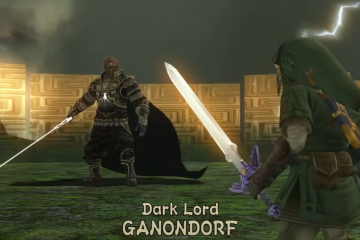
Lastly, I’ll be applying the tools of analytic philosophy, together with my body of work on video game theory, to explore the ways in which games can use the metaphysics of their worlds to generate especially deep-seated and cerebral horror for the player. I’ll argue that the horror of Bloodborne is actually much more realistic than you thought (and you’ll wish I hadn’t shown you why that’s the case). I’ll argue that the metaphysics of Termina imply an interpretation of Majora’s Mask that strays outside the realm of Legend of Zelda canon and instead finds its home in nihilistic terror. I’ll argue that the horror of Silent Hill 2 isn’t fundamentally about James’ relationship with any of the other characters in the town–rather, it’s about his relationship with the player. If you want to get primed for this section (or spoil it for yourself), you can check out my earlier work on Bloodborne and my comprehensive analysis of Majora’s Mask.

We’ll all be hanging around after the panel to answer any questions you may have, and we’ll be around throughout the rest of PAX if you want to keep the conversation going. We’ll also hopefully be able to get the presentation documented in some capacity, so look for that online in the coming week if you can’t make it to PAX Aus.

To all you PAX-goers: see you Saturday.


Aaron Suduiko

Aaron Suduiko is the Founder and Chief Video Game Analyst of With a Terrible Fate. In his capacity as a philosopher of video-game storytelling, he specializes in the relationship between player and avatar, and the myriad ways in which that relationship centrally influences the stories of video games. The heart of Suduiko's philosophy of video-game fiction is his theory of "the fictional player": according to this view, the player's role in a video game is not that of identification with the game's avatar; instead, the player plays a separate, more metaphysically foundational fictional role that makes possible events within a video game's story actual, similar to Leibniz's conception of god. Suduiko's application of this view in his analyses on With a Terrible Fate have led to novel interpretations of games such as Bloodborne, Dark Souls, Dishonored, NieR, Returnal, Xenoblade Chronicles, Bandai Namco's "Tales of" series, BioShock Infinite, Code Vein, Final Fantasy VII Remake, Ni No Kuni, and Silent Hill. The foundations of the fictional player theory may be found in the Journal of the Philosophy of Games: https://journals.uio.no/JPG/article/view/4799/5504 Suduiko graduated Harvard College in 2017 with high honors in his major, philosophy. Part of his degree included three independent studies on the storytelling of video games, advised by philosophy professors. In his senior year, he wrote an honors thesis on the ontology of video games as a storytelling object, earning high honors for the written work and highest honors for his oral defense of it. Suduiko has shared his work on the philosophy of video-game storytelling at a variety of venues, including: Harvard’s philosophy department; PAX West, PAX East, PAX South, and PAX Aus; Harvard’s annual ARTS FIRST festival; the British Society of Aesthetics’ postgraduate conference; and SUNY Oneonta’s undergraduate philosophy conference. An article adapted from a chapter of his thesis on the ontology of video-game storytelling was published in the peer-reviewed Journal of the Philosophy of Games. His work on the aesthetics of quantum mechanics in BioShock Infinite was published in Cornell’s undergraduate philosophy journal, Logos. He’s advised Harvard librarians about the literary value of video games and the need to make them available as library resources. Suduiko started analyzing video games in his senior year of high school, when he compared and contrasted the role-playing dynamics of video games and stage plays. After he started his degree in philosophy in 2014 and heard about the 3D remake of Majora’s Mask, he created With a Terrible Fate as a personal blog analyzing the philosophical and artistic value of Majora’s Mask. Since then, he’s grown With a Terrible Fate into a publication of video game analysts striving to understand the stories of video games in new, rigorous, illuminating ways. Suduiko is currently pursuing a PhD in philosophy at the University of Southern California. Beyond the direct analysis of video-game stories, his main research interests center on how the structure and dynamics of video-game stories can serve as novel models for illuminating real-world issues of practical reasoning, social context, and personal identity.

0 Comments

Leave a Reply

Avatar placeholder

Your email address will not be published. Required fields are marked *