A couple of weeks ago, we announced that With a Terrible Fate would be offering two panels at PAX East 2018 this coming April in Boston. Today, we’re thrilled to announce that we will also be presenting a third panel at PAX East: “Can Fan Fiction Teach Us About the Official Zelda Timeline?”

Read on for a run-down of what you can expect.

“Can Fan Fiction Teach Us About the Official Zelda Timeline?”

Thursday, April 5th, 2:00 PM, Albatross Theatre | Featuring: Aaron Suduiko, Jaron R. M. Johnson, and CJ Thomas

When people think of “fan fiction,” they typically imagine a kind of intimate and personal storytelling intended to embellish a fan’s relationship with an “official” story or series. But what if we could write fan fiction in a way that empowers everyone to understand the “official” stories in new, illuminating ways?

This is what we’ll explore in this panel: a method of writing fan fiction that can be personally fulfilling while also providing a new, analytical lens through which to view its “official” source story.

From With a Terrible Fate’s presentation at PAX South 2018. We spoke about how and why we ought to establish a “canon” of video-game storytelling.

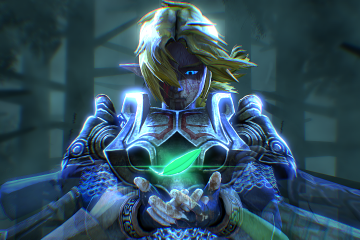
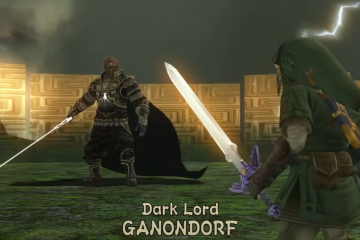
This panel is based on Jaron and CJ’s ongoing article series, Hero of Time Project: a series in which they design and use this method of analytical fan fiction to tell a new story that bridges the gap in the Legend of Zelda timeline between Ocarina of Time and Twilight Princess.

The hour-long panel will look something like this:

  1. For about 15 minutes, Aaron will discuss the popular conception of fan fiction, and how Hero of Time Project represents one of With a Terrible Fate’s broader principles: the ordinary practices of engaging with video games, when revised to be more analytically rigorous, can give everyone radically new ways to understand and appreciate video-game storytelling.
  2. For about 30 minutes, Jaron and CJ will talk about Hero of Time Project. They’ll cover what inspired them to write this fan fiction, how they approached the task of writing a story that was valuable both on its own terms and in the broader context of the Zelda series—and they’ll share some of their story’s content with you.
  3. For the last 15 minutes, we’ll have an open discussion with the audience. Want to discuss the value of fan fiction more? Want to argue about the Zelda timeline? This is your chance!

We’re honored and thrilled to have another venue to talk video-game storytelling with you at PAX East. We hope to see you there—and at our other two panels, too!

Aaron Suduiko

Aaron Suduiko is the Founder and Chief Video Game Analyst of With a Terrible Fate. In his capacity as a philosopher of video-game storytelling, he specializes in the relationship between player and avatar, and the myriad ways in which that relationship centrally influences the stories of video games. The heart of Suduiko's philosophy of video-game fiction is his theory of "the fictional player": according to this view, the player's role in a video game is not that of identification with the game's avatar; instead, the player plays a separate, more metaphysically foundational fictional role that makes possible events within a video game's story actual, similar to Leibniz's conception of god. Suduiko's application of this view in his analyses on With a Terrible Fate have led to novel interpretations of games such as Bloodborne, Dark Souls, Dishonored, NieR, Returnal, Xenoblade Chronicles, Bandai Namco's "Tales of" series, BioShock Infinite, Code Vein, Final Fantasy VII Remake, Ni No Kuni, and Silent Hill. The foundations of the fictional player theory may be found in the Journal of the Philosophy of Games: https://journals.uio.no/JPG/article/view/4799/5504 Suduiko graduated Harvard College in 2017 with high honors in his major, philosophy. Part of his degree included three independent studies on the storytelling of video games, advised by philosophy professors. In his senior year, he wrote an honors thesis on the ontology of video games as a storytelling object, earning high honors for the written work and highest honors for his oral defense of it. Suduiko has shared his work on the philosophy of video-game storytelling at a variety of venues, including: Harvard’s philosophy department; PAX West, PAX East, PAX South, and PAX Aus; Harvard’s annual ARTS FIRST festival; the British Society of Aesthetics’ postgraduate conference; and SUNY Oneonta’s undergraduate philosophy conference. An article adapted from a chapter of his thesis on the ontology of video-game storytelling was published in the peer-reviewed Journal of the Philosophy of Games. His work on the aesthetics of quantum mechanics in BioShock Infinite was published in Cornell’s undergraduate philosophy journal, Logos. He’s advised Harvard librarians about the literary value of video games and the need to make them available as library resources. Suduiko started analyzing video games in his senior year of high school, when he compared and contrasted the role-playing dynamics of video games and stage plays. After he started his degree in philosophy in 2014 and heard about the 3D remake of Majora’s Mask, he created With a Terrible Fate as a personal blog analyzing the philosophical and artistic value of Majora’s Mask. Since then, he’s grown With a Terrible Fate into a publication of video game analysts striving to understand the stories of video games in new, rigorous, illuminating ways. Suduiko is currently pursuing a PhD in philosophy at the University of Southern California. Beyond the direct analysis of video-game stories, his main research interests center on how the structure and dynamics of video-game stories can serve as novel models for illuminating real-world issues of practical reasoning, social context, and personal identity.

0 Comments

Leave a Reply

Avatar placeholder

Your email address will not be published. Required fields are marked *